Garmin Edge 850 and 550 Battery Life Fails Serious Cyclists
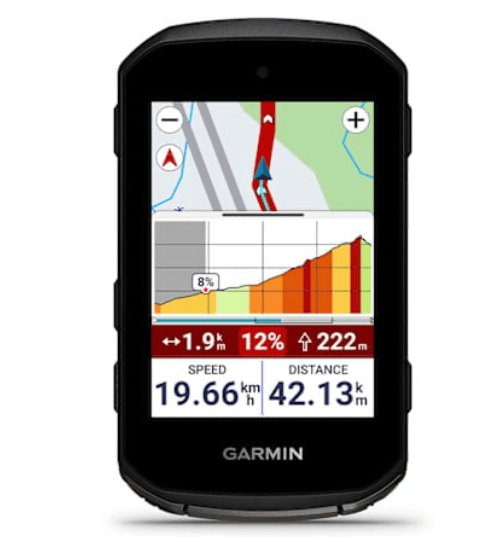
The Garmin Edge 850 and 550 have a battery problem. For cyclists who spend 6-plus hours in the saddle, or anyone eyeing a full-distance triathlon bike leg, the reported battery drain on these units is a genuine dealbreaker, not a minor inconvenience.
What the Numbers Actually Mean on the Bike
Garmin's official figures for GPS-on, all-sensors-active use have always been optimistic. The Edge 540 already pushed limits at around 16 hours claimed, and riders regularly saw 12 to 13 hours in real conditions with mapping, heart rate, and ANT+ sensors running. If the 850 and 550 are stepping backward from that baseline, you are looking at units that cannot cover an Ironman bike leg plus warm-up without a battery pack strapped to the stem. That is a real problem for a head unit in this price bracket.
The Edge 830, which the 850 presumably replaces, delivered roughly 20 hours in GPS mode. Coros has set an aggressive benchmark here: the Coros Dura cycling computer claims 35 hours in standard GPS mode. Wahoo's Elemnt Roam 2 sits around 17 hours. If the 850 lands below the 830's real-world figure, Garmin is moving in the wrong direction while competitors are not.
Sensor Setup and Why It Drains Power
The Edge 850 likely pulls data from a chest HRM strap via ANT+ or Bluetooth, which uses electrical impulse detection at the strap level, not the unit itself. The head unit is just receiving a signal, so strap connectivity is not the battery killer. The drain comes from the processor handling full-color mapping, turn-by-turn navigation, ClimbPro calculations, and constant GPS polling. Add a barometric altimeter tracking air pressure changes and live segment alerts, and you have a screen that is working hard every second of a long ride.
The 550 sits as the more affordable option in the pair, likely with a smaller battery cell to keep the price down. That trade-off makes sense on paper for a 3-hour club rider. It makes zero sense for anyone doing sportives over 150km, gravel epics, or back-to-back training days where charging between rides is not guaranteed.
Real Use Cases Where This Hurts
For Hyrox and CrossFit athletes, cycling computer battery is irrelevant. But for the triathlete doing a 70.3 or full Ironman, the bike leg alone runs 2.5 to 5.5 hours depending on the athlete. Add pre-race GPS acquisition time, transition sitting, and you need comfortable headroom. Cycling computer battery anxiety is something the Wahoo Elemnt Bolt and Coros Dura have largely eliminated. Garmin is apparently reintroducing it.
Gravel and ultra-endurance cyclists will feel this most. A 200km gravel event can easily run 8 to 10 hours. Riders on those events are already carrying battery banks for their lights. Adding the head unit to that charging rotation is frustrating when you are paying 400 euros or more for a flagship device. The Garmin Edge 1050, Garmin's top-tier unit, manages around 24 hours in GPS mode. If the 850 sits meaningfully below that, the product hierarchy makes no sense.
What's Missing and What Disappoints
Beyond battery, there are questions about what Garmin actually improved to justify new model numbers. If the 850 and 550 are essentially the 830 and 530 with a firmware refresh and a shorter battery, the upgrade case collapses entirely. Garmin's mapping and navigation software remains best-in-class, and their Connect IQ ecosystem is still ahead of Wahoo's app support. But those advantages do not compensate for a unit that dies before you finish your ride. There is no word yet on whether Garmin has improved the optical sensor suite for cycling dynamics or refined the power meter compatibility, which would at least offer reasons to consider the switch.
The price point will determine how badly this lands. If the 850 comes in at or above the Edge 1050's street price, the battery regression is indefensible. At a mid-range price with a clear feature differentiation, it becomes a harder but still uncomfortable call.
Bottom line: wait. If you need a cycling computer today, the Wahoo Elemnt Roam 2 at around 300 euros or the Coros Dura for pure battery endurance are safer bets. Existing Edge 830 or 1040 owners have no reason to upgrade based on what is known. Garmin needs to clarify real-world battery figures before anyone hands over money for either of these units.
Mentioned watches