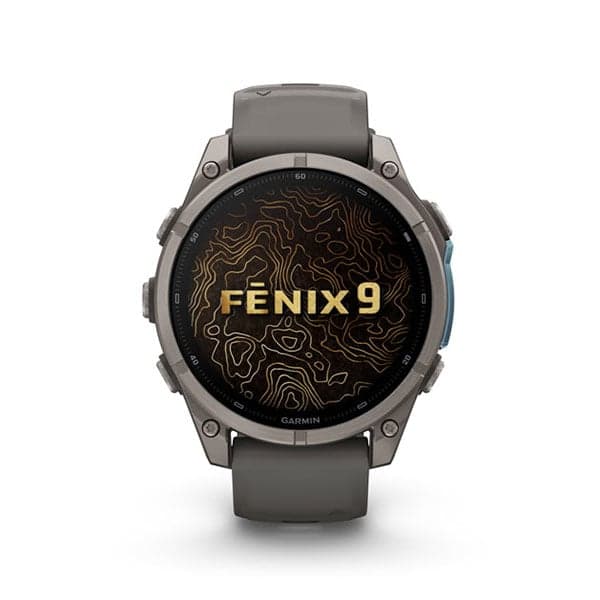
Garmin Fenix 8 Review: Premium Multisport Watch, 2026 Perspective
What it is
The Garmin Fenix 8 is Garmin's flagship multisport GPS watch, sitting at the top of the outdoor and adventure segment. It targets serious endurance athletes, mountaineers, and triathletes who want a do-everything device and are willing to pay a premium price that typically starts above $700 and climbs for Solar variants. In 2026, it remains the benchmark that other outdoor watches get measured against.
Key specs
- GPS chipset: Multi-band GNSS with support for GPS, GLONASS, Galileo, and BeiDou satellite systems
- Battery life: Up to 18 days smartwatch mode; GPS-only mode varies by variant (Solar versions extend this meaningfully in strong sunlight)
- Sensors: Wrist optical PPG sensor for heart rate and HRV (beat-to-beat intervals derived from blood volume changes via LED light); SpO2 optical blood oxygen sensor; skin temperature sensor; barometric altimeter that calculates altitude from air pressure changes (not GPS elevation)
- Display: MIP (memory-in-pixel) on standard variants; AMOLED on select Pro variants, both approaches have real trade-offs depending on use case
- Weight: Approximately 63-80g depending on case size and material
- Water resistance: 10 ATM (100 metres)
Performance in the real world
GPS accuracy on the Fenix 8 with multi-band enabled is genuinely excellent in open terrain. In urban canyons and dense forest, multi-band mode keeps track shape tight in a way that single-band watches simply cannot match. Garmin's GPS performance is strong, but competition at the premium end of the market has tightened considerably, and the brand's satellite tracking lead is no longer automatic.
Heart rate accuracy during steady aerobic efforts is strong. The wrist optical PPG sensor handles Zone 2 runs well. Where it gets shakier, as with all wrist optical sensors, is high-intensity interval work and strength sessions where wrist movement creates noise in the blood volume signal. For those efforts, pairing with a chest strap like the Garmin HRM-Pro, which detects the heart's electrical impulses directly, remains the better choice for precision data.
Sleep tracking is comprehensive. The Fenix 8 logs sleep stages, tracks overnight HRV via the optical sensor, and feeds into Garmin's Body Battery score. The quality of stage detection is reasonable but not class-leading. Polar's optical-based sleep algorithms still edge Garmin's in raw stage accuracy for many users. The Fenix 8's strength is integrating sleep data into a broader recovery and training load picture inside Garmin Connect, which remains one of the most complete ecosystems available.
The app ecosystem is the Fenix 8's strongest competitive card. Garmin Connect IQ, compatibility with Strava, TrainingPeaks, Komoot, and dozens of other platforms, plus Garmin's own coaching features, means the device fits into almost any serious athlete's workflow. Competitors are still building out the ecosystem depth that Garmin has spent years accumulating. That said, the Fenix 8 has not been without firmware headaches, and users should check current firmware release notes before purchase to confirm any known bugs have been resolved.
The barometric altimeter performs well for elevation tracking during hikes and climbs, delivering more reliable altitude data than GPS-derived elevation, which fluctuates with satellite geometry. On multi-day mountain routes, cumulative elevation figures are trustworthy enough to plan nutrition and pacing around.
Who it's for / who should skip it
Buy the Fenix 8 if you are a multisport athlete who lives inside the Garmin ecosystem, needs reliable multi-band GPS for technical terrain, and wants a watch that handles running, triathlon, hiking, and skiing under one device without compromise. It makes particular sense if you already use Garmin's HRM straps or cycling sensors, since the integration is seamless.
Skip it if you primarily want the sharpest possible display: the MIP screen looks flat and dim compared to an AMOLED watch indoors or in low light. The AMOLED Fenix 8 variant addresses this but hits battery life. Skip it also if you are budget-sensitive. There are capable alternatives at significantly lower price points that cover the core GPS and training load features most athletes actually use. If cellular connectivity matters to you, the Fenix 8 lacks it, which is a real limitation depending on your use case.
Verdict
The Garmin Fenix 8 is still the most complete outdoor multisport watch you can buy if ecosystem depth and sensor breadth matter to you. Its GPS crown is under real pressure from well-funded competitors, and you should verify current firmware stability before purchasing. If you are in no rush, checking whether a next-generation Fenix model is imminent before committing is smart shopping.
Where to buy
Garmin Fenix
7.8/10 — TrackerBrief score