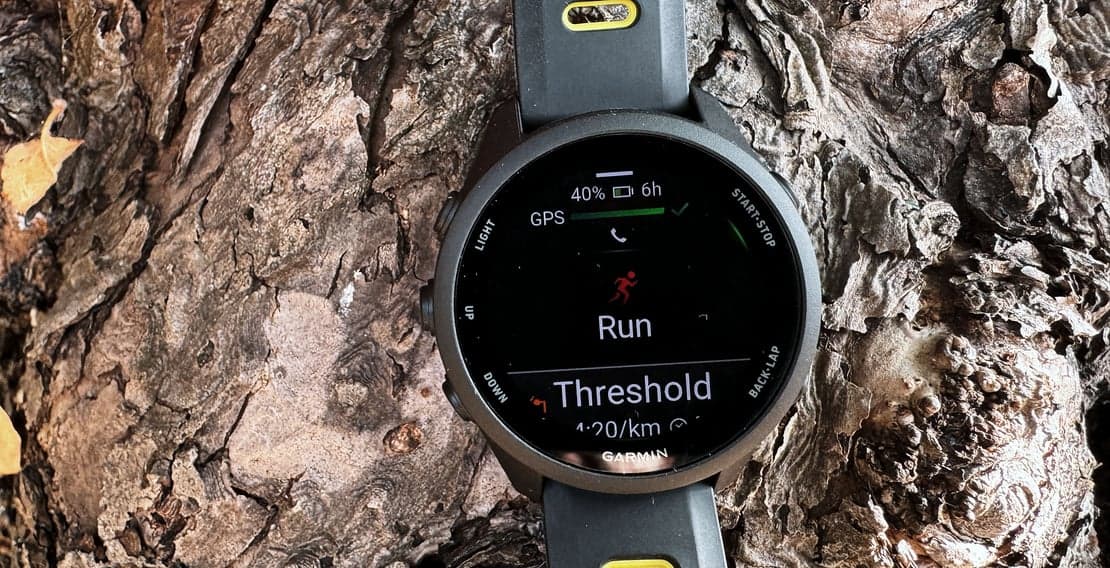
Garmin Forerunner 170 Review: AMOLED Entry-Level Runner
What it is
The Garmin Forerunner 170 sits at $299.99 / £259.99, making it the new entry point for Garmin's running-focused lineup that actually takes the sport seriously. It targets beginner-to-intermediate runners who want a full physiological monitoring stack without jumping straight to a Forerunner 265 or 965. Alongside it, Garmin launched the cheaper Forerunner 70 at $249.99 / £219.99, which means the 170 has to justify a $50 premium over its own sibling. That is a tight argument to win.
Key specs
- Display: AMOLED (MIP has been fully dropped from the Forerunner line with this generation)
- GPS chipset: Multi-band GNSS with satellite-based positioning
- Battery life: Specific GPS hours not fully confirmed in available sources; a battery-mode quirk exists that Garmin does not disclose in marketing materials
- Sensors: Full physiological stack including wrist optical PPG-based heart rate, HRV monitoring, SpO2 (blood oxygen saturation via optical sensor), and skin temperature sensor
- Water resistance: Standard Garmin running watch water resistance rating
- Weight: Not confirmed in available sources
Performance in the real world
Testing at parkrun and beyond gives a reasonable picture of what the Forerunner 170 actually does under pressure. The move to AMOLED is the biggest visual upgrade Garmin has made at this price tier in years. Outdoors in sunlight, AMOLED screens on Garmin devices have historically needed a brightness boost to compete with the old MIP panels, and that trade-off hits battery life hard. The undisclosed battery-mode quirk flagged during testing is worth paying attention to: if Garmin is not being transparent about how the watch manages power across GPS modes, real-world GPS battery life may fall noticeably short of headline figures depending on which satellite systems are active.
The full physiological stack is genuinely new territory for this price point in the Forerunner family. HRV is derived from the wrist optical sensor using PPG, measuring blood volume changes through LED light rather than electrical signals, so accuracy during sleep and resting periods is solid. During hard running efforts, wrist optical HR lags behind reality, particularly in interval sessions or fast parkrun finishes where heart rate is spiking quickly. That is a physics limitation of PPG sensors on the wrist, not a Garmin-specific failure, but it means the 170 is not the right tool if you are chasing precise lactate threshold data from wrist HR alone. A chest strap pairing fixes that.
SpO2 readings and skin temperature monitoring are useful for recovery trend tracking over weeks rather than individual workout data. Garmin's ecosystem wraps this into Body Battery and sleep scoring, which are genuinely useful if you commit to wearing the watch 24 hours a day. The sleep tracking quality at this price tier is competitive. GPS accuracy at parkrun distances looked solid in testing, consistent with Garmin's performance at mid-range, though the specific GNSS chipset details were not fully disclosed in available sources.
The app ecosystem is Garmin Connect, which remains the most data-rich platform in consumer wearables. If you are coming from Fitbit or a basic Polar, the depth will feel overwhelming at first. If you are coming from Apple Watch, you will miss the third-party app store but gain far superior running metrics and battery life.
Who it's for / who should skip it
The Forerunner 170 makes most sense for runners who are past the absolute beginner stage and want a watch that will grow with them for two or three years. You get Garmin's full physiological monitoring, a proper AMOLED screen, and the credibility of the Forerunner line without paying Forerunner 265 money. If you run three or four times a week, care about recovery tracking, and want sleep data that is actually actionable, this watch delivers.
Skip it if you are a complete beginner who runs once a week for fun. The Forerunner 70 at $249.99 also gets AMOLED and the full physio stack, and the $50 saving matters when you are not sure running will stick. Skip it also if you are a serious competitor: the Forerunner 265 at a higher price brings a more refined GPS chipset experience and clearer battery transparency. The undisclosed battery quirk is genuinely annoying for anyone doing long runs or ultras where GPS battery management is not a mystery you want to solve mid-race.
Compared directly to the Polar Pacer Pro, the Forerunner 170 wins on screen quality and ecosystem depth. The Pacer Pro wins on running-specific metrics maturity and honest battery reporting. Against the Coros Pace 3, the 170 loses on raw GPS battery stamina but wins on display and Garmin's broader health platform.
Verdict
The Forerunner 170 is a capable, well-equipped running watch that brings a genuinely good AMOLED screen and a full sensor stack to a price point Garmin has not served this well before. The undisclosed battery quirk needs addressing, and the $50 gap over the Forerunner 70 is hard to justify unless the 170 offers meaningfully better hardware. Worth buying if the price drops slightly or Garmin clarifies battery behavior; at full price, check the 70 first.
Where to buy
Garmin Forerunner 170
7.0/10 — TrackerBrief score