Fitbit Air on Your Bicep: DIY Sleeve Fix and 150-Minute Ride Data
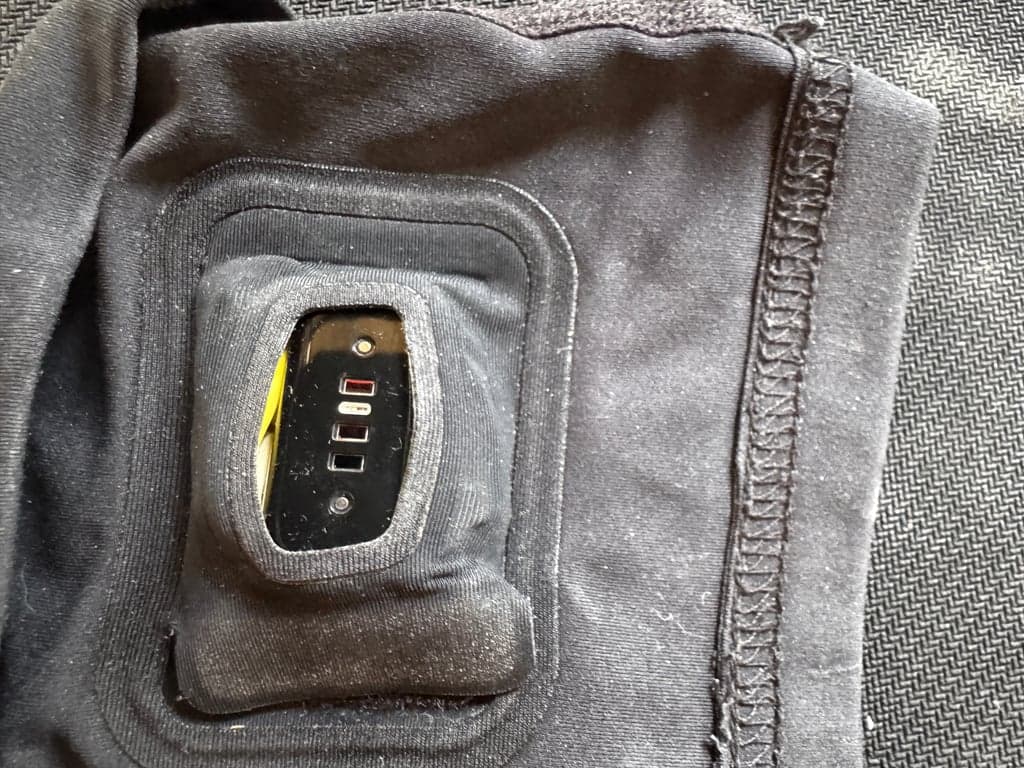
The Fitbit Air has no official arm sleeve. No bicep band from Fitbit, no dedicated upper-arm accessory in the box. What exists right now is a workaround: threading the Air pebble into a Whoop Any-Wear sleeve and wearing it on the bicep. It works, mostly, but it comes with real caveats worth knowing before you try it.
The Rotation Problem and the DIY Fix
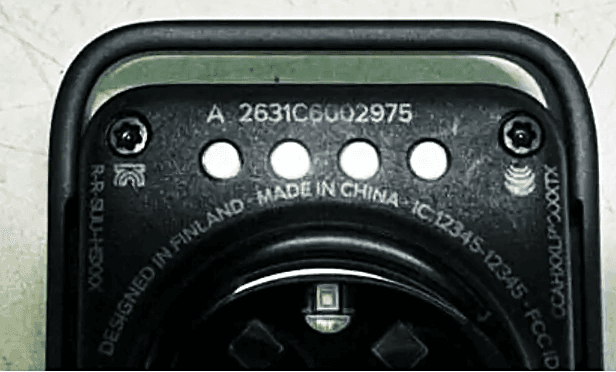
The core issue is orientation. The Air pebble sits loose enough in the Whoop Any-Wear sleeve that it rotates during movement, which pulls the optical PPG sensor away from consistent skin contact. PPG accuracy depends entirely on stable, firm contact between the light emitters and your skin, so rotation is not a cosmetic annoyance. It directly degrades heart rate data quality. The workaround documented by The5kRunner involves a piece of washing-up glove material to friction-lock the pebble in place inside the sleeve. Crude, but reportedly effective enough to get usable data. A proper third-party bicep band designed specifically for the Air pebble is reportedly in development, which would solve the contact and rotation problems more cleanly than any DIY fix.
Why bother wearing it on the upper arm at all? For endurance athletes, wrist placement has known limitations. During cycling, wrist flexion and handlebar vibration both introduce motion artifact into PPG readings. The upper arm sits closer to the brachial artery, moves less during most sports, and generally gives cleaner optical HR signal. Whoop has offered bicep placement as a feature for years precisely because of this. Polar's Verity Sense arm sensor makes the same argument and sells well among triathletes who want wrist-free HR tracking during swims and bike legs.
What 150 Minutes of Z2 Riding Actually Showed
A 150-minute endurance ride comparing the Fitbit Air against a Whoop MG, a Frontier ZONE optical sensor, and an Amazfit Helio Strap chest ECG unit produced results that go beyond a simple accuracy verdict. The ECG strap here is critical context: chest straps using electrical impulse detection give you the closest thing to a clinical reference for heart rate, capturing the actual electrical signal from cardiac muscle rather than inferring pulse from blood volume changes the way any optical sensor does. The Helio Strap adds ECG metrics, including HRV morphology data, that no mainstream sport watch brand currently replicates at this price point.
The more important finding from that ride is methodological. Published accuracy comparisons for sport wearables routinely use statistical approaches that can obscure systematic bias. If a device reads consistently 4 bpm high across a 150-minute effort, certain correlation metrics will still return a number that looks acceptable. The5kRunner's analysis surfaces this as a real problem for how consumers and reviewers interpret published accuracy data, not just for the Fitbit Air but across the category. For athletes making training decisions based on heart rate zones, a consistent 4 bpm offset matters far more than a correlation coefficient suggests.
During Z2 riding specifically, where you are trying to stay in a fairly narrow intensity band, that kind of systematic offset is the worst-case scenario. A Garmin HRM-Pro chest strap, using the same electrical detection principle as the Helio, will give you sub-1 bpm accuracy against ECG reference in steady-state conditions. The Whoop MG optical sensor, worn on the wrist or bicep, typically performs within 2 to 3 bpm in Z2 cycling once motion artifact is controlled. Where the Fitbit Air sits in that comparison during a 150-minute ride, and whether the bicep placement via the DIY sleeve improves its numbers versus wrist placement, is exactly the kind of test that matters for a real training decision.
Accuracy Context and Sensor Placement Trade-offs
The Fitbit Air's optical sensor reads blood volume changes through light, the standard PPG approach used by every wrist-worn sport device from Apple Watch Ultra 3 to Coros Pace 3 to Garmin Forerunner 965. None of those devices are ECG straps. The accuracy gap between wrist PPG and chest ECG is real and well-documented, but upper-arm PPG with good contact narrows it meaningfully. The Polar Verity Sense, for reference, achieves accuracy within 1 to 2 bpm of chest strap reference in controlled cycling tests when worn correctly on the upper arm. If a proper third-party sleeve can give the Air pebble equally stable bicep contact, there is a reasonable argument it could approach that performance level.
What is missing right now is that proper sleeve. The washing-up glove friction fix is not a product. It is a workaround that requires fiddling, degrades after washing, and introduces inconsistency between sessions. Fitbit has not announced an official arm band accessory. Third-party options are not yet on sale. Until something designed specifically for the Air pebble exists, upper-arm use remains experimental. There is also the deeper question of whether the Air's underlying sensor and algorithm are tuned for arm placement or whether the firmware assumes wrist context when processing the PPG signal, which would affect accuracy independent of physical fit.
The Fitbit Air at $99 is an interesting device for recovery tracking and low-friction daily wear, as covered in detail in our [full Fitbit Air review](/en/articles/fitbit-air-review-100-display-less-band-vs-whoop-in-2026-2026-06-05). But for athletes who want accurate training HR from an upper-arm optical sensor right now, the Polar Verity Sense at around $90 is a finished, validated product. The Whoop MG's Any-Wear sleeve is a proven system with firmware that accounts for bicep placement. The Fitbit Air bicep setup is a DIY project. Worth watching as third-party accessories develop, but not yet a recommendation for athletes who need reliable zone data in competition.
Mentioned watches
Head-to-head comparisons
Buying guides