Fitbit Air vs Whoop MG Heart Rate Accuracy: HYROX and Z2 Ride Data
Two real-world tests, one clear pattern. The Fitbit Air and Whoop MG went head-to-head across a HYROX simulation and a 150-minute Z2 endurance ride, with an Amazfit Helio ECG strap and Amazfit Cheetah 2 Ultra rounding out the comparison. The results expose both a sensor accuracy gap and a statistical methodology problem that makes most published accuracy claims unreliable.
Sensor Setup and What Each Device Actually Measures
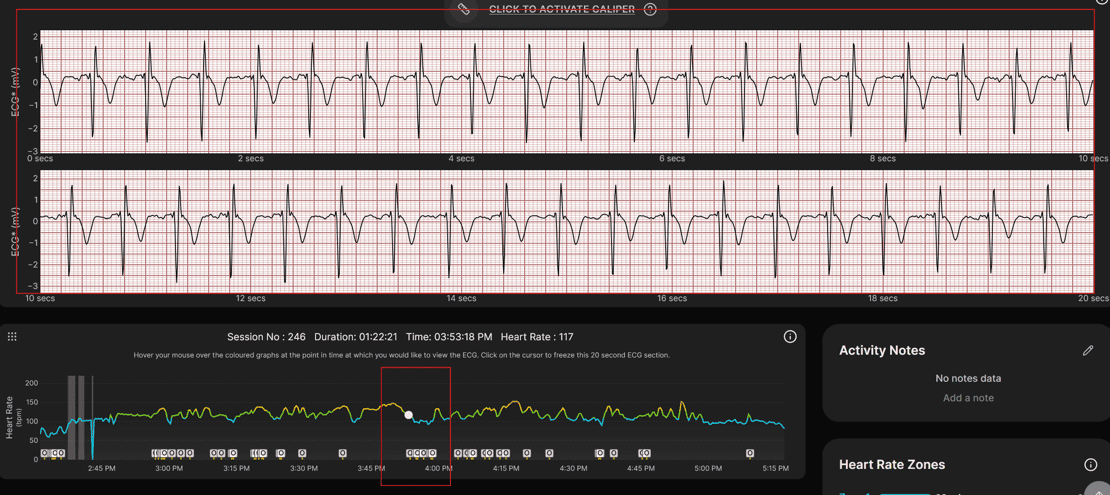
Before the numbers, the basics matter. Both the Fitbit Air and Whoop MG use PPG optical sensors at the wrist or upper arm, reading blood volume changes via light to estimate heart rate. The Amazfit Helio is a chest strap that reads electrical impulses directly from the heart muscle, which is why it's treated as the gold-standard reference here. ECG-based chest straps like the Helio, Polar H10, or Garmin HRM-Pro capture beat-to-beat timing with a precision that no PPG wrist device currently matches, especially during high-intensity, mixed-movement efforts like HYROX. That gap matters enormously when the activity involves burpees, sled pushes, and farmers carries.
Five devices total were used in the HYROX simulation test. Fitbit Air was worn on the wrist. Whoop MG was positioned on the bicep. The Amazfit Cheetah 2 Ultra also ran simultaneously. Post-session, the group headed to a pub, which added a low-intensity recovery segment to the dataset. That kind of real-world messy data is exactly where consumer devices either earn trust or fall apart.
HYROX Results: Fitbit Air Struggles, Whoop MG Holds Its Own
Fitbit Air produced the widest error range of any device tested across the HYROX simulation. That's not a minor variance. A wide error range in a functional fitness context means the device is regularly misreading during the transitions, the loaded carries, and the wall balls , the exact moments when an athlete needs accurate load data. For Hyrox athletes tracking training zones, that unreliability makes it hard to trust any session summary the Fitbit Air produces.
Whoop MG on the bicep, by contrast, was essentially tied with the Amazfit Cheetah 2 Ultra on accuracy across the same session. That's a meaningful result. Bicep placement reduces motion artifact compared to the wrist, and Whoop has clearly optimized its PPG algorithm for that position. Polar Verity Sense users already know this trick , optical sensors off the wrist consistently outperform wrist-based PPG during weight-bearing and grip-heavy movements. Whoop MG appears to have closed that gap relative to a GPS multisport watch like the Cheetah 2 Ultra in this context.
Z2 Ride Data and the Methodology Problem
The 150-minute Z2 ride test added a different stress condition: sustained, moderate-intensity effort where heart rate is relatively stable but small deviations still matter for training zone compliance. Frontier ZONE, Whoop MG, Fitbit Air, and the Amazfit Helio strap all ran simultaneously. Z2 work is where PPG devices typically look their best on paper, because the motion artifact is lower and heart rate doesn't spike unpredictably.
What the ride data surfaced is something more systemic than just Fitbit vs. Whoop: the statistical methodology used in most published accuracy comparisons distorts the real picture. Mean absolute error reported across a full session can hide localized failures during zone transitions or cadence changes. A device that is accurate 90% of the time but catastrophically wrong during the 10% that matters most to your training prescription will still produce a flattering average error number. The ECG strap captured metrics around HRV and beat-to-beat intervals that no mainstream sports brand, including Garmin, Polar, Coros, or Whoop, has yet replicated at the consumer price point in the same form factor. That's the harder benchmark and the one that matters for recovery tracking and aerobic threshold detection.
For a deeper look at how the Fitbit Air handled the 150-minute ride specifically, including a DIY bicep sleeve approach, see [Fitbit Air on Your Bicep: DIY Sleeve Fix and 150-Minute Ride Data](/en/articles/fitbit-air-on-your-bicep-diy-sleeve-fix-and-150-minute-ride-data-2026-06-06). The app side of the Fitbit Air equation is also worth flagging: the [Google Health 5.0 app review](/en/articles/google-health-5-0-app-review-design-flaws-hurt-fitbit-air-data-2026-06-08) found design flaws that further compromise how the raw sensor data gets presented to the athlete.
What's missing from the Fitbit Air is consistency under pressure. A $100 display-less band is an interesting proposition, but only if the core job, accurate heart rate during varied athletic effort, is done well. It isn't, at least not across these two tests. Whoop MG costs significantly more, sits in a different category as a recovery-focused wearable, and doesn't give you GPS or a display either. Coros Pace 3 at a similar price to Whoop gives you a full multisport GPS watch with a chest strap pairing option that will always outperform wrist optical on accuracy. The Fitbit Air's open water swim performance also raised separate concerns, covered in detail here: [Fitbit Air Open Water Swim Data Loss](/en/articles/fitbit-air-open-water-swim-data-loss-what-athletes-need-to-know-2026-06-06).
The verdict is straightforward. If you're a Hyrox athlete or cyclist who cares about training zone accuracy, the Fitbit Air is not the right tool. Whoop MG worn on the bicep is a genuinely competitive optical sensor in these conditions, but you're paying for a recovery ecosystem, not a training computer. For the price of both, a Garmin Forerunner 165 paired with a Polar H10 chest strap gives you GPS, display, and reference-grade heart rate. The Fitbit Air review case as a $100 Whoop alternative is explored in full at [Fitbit Air Review: $100 Display-Less Band vs Whoop in 2026](/en/articles/fitbit-air-review-100-display-less-band-vs-whoop-in-2026-2026-06-05). Not the device for serious endurance work. Not yet.
Mentioned watches
Head-to-head comparisons
Buying guides