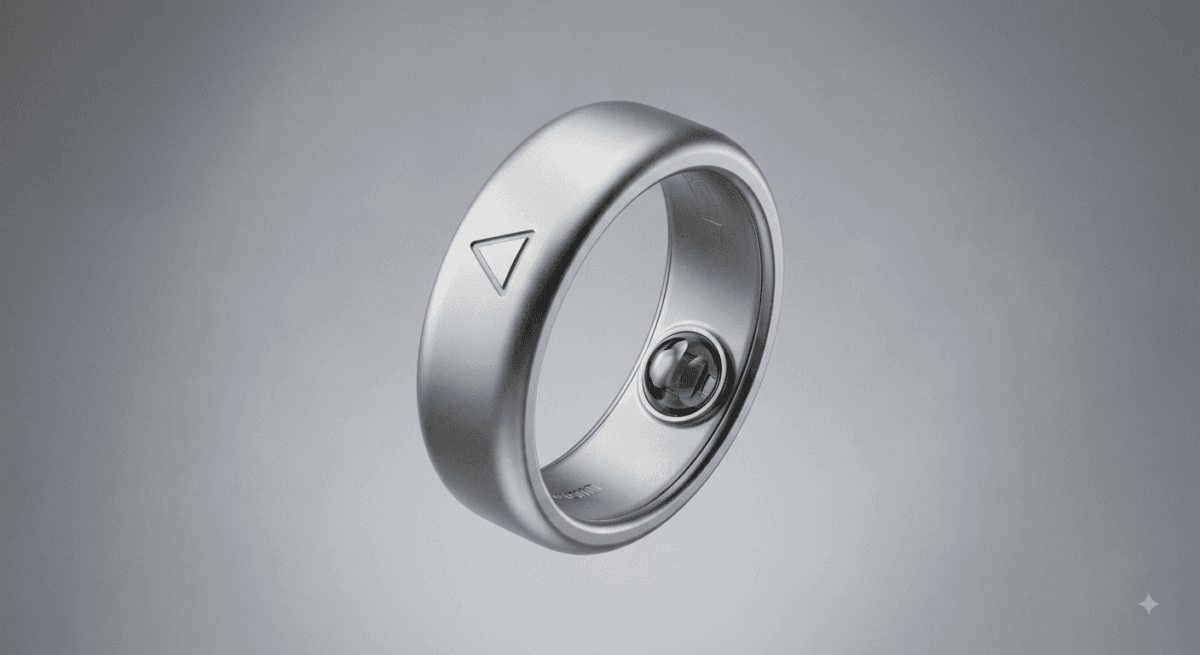
Garmin CIRQA Leak: Reviewer Spotted Wearing 5 Optical Bicep Bands
A photo circulating in running tech circles shows a reviewer wearing five optical HR bands simultaneously on the upper arm. One of them might be the Garmin CIRQA, a bicep-mounted wearable that has leaked in fragments over the past few months. If confirmed, this would be Garmin's direct answer to the bicep optical sensor segment that Polar, Wahoo, and smaller players like Movesense have been quietly occupying.
What the CIRQA Reportedly Is
The CIRQA appears to be a standalone optical PPG band designed for the upper arm rather than the wrist. Bicep placement matters for optical accuracy. The upper arm sits over the brachial artery, which is a larger vessel than the radial artery at the wrist, and tends to produce a cleaner blood volume pulse signal during high-intensity movement. That's why Polar's Verity Sense, which clips to the upper arm or goggles, has consistently outperformed wrist PPG in independent cycling and CrossFit tests. Garmin knows this. The CIRQA looks like their move to own that space.
The leaked device appears to broadcast via ANT+ and Bluetooth simultaneously, which would let it pair to a Garmin head unit, a third-party cycling computer, or a gym display at the same time. Garmin's current HRM-Pro Plus chest strap does the same dual broadcast, and it's a genuinely useful feature for Hyrox athletes who rotate between a treadmill and a rig station. If the CIRQA delivers that same flexibility from the arm, it could replace chest straps for swimmers and CrossFitters who hate the strap dig during pull-ups.
The Sensor Stacking Problem
Here's the interesting wrinkle in that photo. The reviewer is wearing five optical bands stacked close together on the same arm. This creates a real interference risk. Optical PPG sensors work by shining green or infrared light into the skin and measuring how much reflects back, which changes as blood volume pulses through the tissue. When two sensors sit within a few centimeters of each other, their emitters can bleed light into adjacent sensors' photodetectors, corrupting the raw signal. The result is artifacted heart rate readings that look plausible but are wrong by 5 to 15 beats per minute.
This kind of optical crosstalk is why Garmin and Polar both include sensor separation warnings in their multi-device documentation. It's also why lab validation protocols isolate devices on opposite arms. Wearing five bands together is almost certainly a deliberate stress test, not normal use. The reviewer may be assessing which devices hold signal integrity under adversarial conditions, and which ones fail first.
How This Compares to Existing Options
The Polar Verity Sense retails around 90 euros and delivers solid PPG accuracy in a lightweight clip form. The Wahoo TICKR FIT is a similar arm band at a comparable price. Neither integrates natively with Garmin's ecosystem the way a CIRQA would. If the CIRQA connects directly to Garmin Connect and feeds into Training Readiness, Body Battery, and HRV Status without a manual sync step, that ecosystem lock-in is real value for athletes already using a Forerunner 965 or Fenix 8.
For swimming specifically, wrist optical sensors remain unreliable in the water because wrist movement during freestyle stroke creates constant motion artifact. The Garmin HRM-Tri and HRM-Swim store data locally and sync post-swim, which works but means no live pace alerts based on HR zones. A bicep band rated for open-water swimming with live ANT+ broadcast would be a meaningful step forward. The CIRQA's waterproofing rating hasn't leaked yet, but the context of the testing suggests aquatic use is on the table.
What's missing from everything we know so far: battery life figures, weight, and whether the CIRQA has its own GPS or relies on a paired watch. The Polar Verity Sense runs around 30 hours per charge. If the CIRQA lands below 20 hours, that's a problem for long-course triathletes. Price is also unknown, but given Garmin's current accessory pricing, expect somewhere between 100 and 150 USD at launch.
The CIRQA, if real and if it ships, looks most interesting for swimmers, CrossFitters, and anyone who finds chest straps uncomfortable during overhead work. It's a harder sell for pure runners who already get acceptable accuracy from the Forerunner 965's wrist optical sensor at race pace. The closest current alternative is the Polar Verity Sense at 90 euros, which does the job well but lives outside Garmin's ecosystem. If the CIRQA prices at 120 USD and integrates cleanly with Garmin Connect, it wins on convenience alone.
Mentioned watches
Head-to-head comparisons
Buying guides