Garmin Q2 2026 Update: Six New Watch Features Reviewed
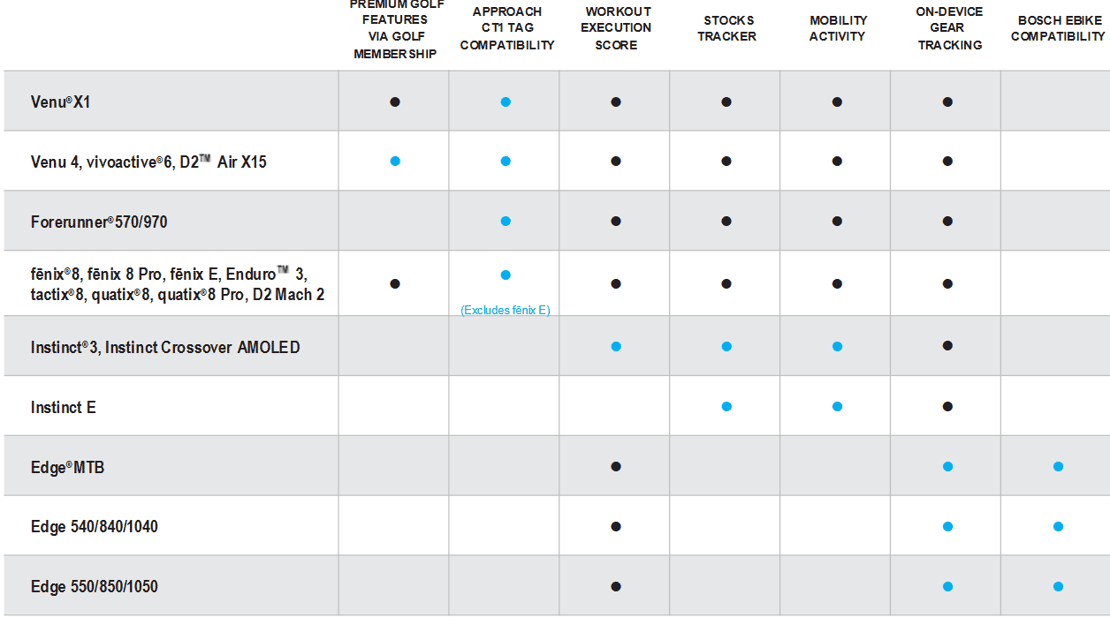
Garmin's Q2 2026 software update started rolling out on June 2, and it brings six new features for supported watches plus two for Edge cycling computers. The catch is real: a growing list of recent watches are not on the supported list, meaning athletes who bought a Fenix 7 or Forerunner 955 two or three years ago may be left waiting or left out entirely. If you are deciding whether to upgrade your hardware or hold on, this breakdown matters.
What the Update Actually Delivers
The six watch features cover areas like training load refinements, recovery metrics, and navigation overlays, building on the algorithmic work Garmin has been pushing since their 2025 aggregate data showed training volume is the strongest predictor of VO2max gains (full breakdown at [/en/articles/garmin-2025-data-training-volume-is-the-top-vo2max-predictor-2026-06-13](/en/articles/garmin-2025-data-training-volume-is-the-top-vo2max-predictor-2026-06-13)). The Edge additions focus on route and power data presentation, which is relevant if you run a dual setup with a head unit and a wrist device. Nothing here reinvents wrist-based optical PPG sensing or alters how the barometric altimeter reads air pressure changes during climbing efforts, but the software layer on top of those sensors gets meaningfully smarter.
On the hardware side, Garmin's optical sensors still use photoplethysmography to measure blood volume changes at the wrist, and these updates sharpen how the watch interprets that raw PPG signal for continuous heart rate and HRV scoring. Chest strap users pushing electrical ECG-level accuracy for intervals are not the target here. This update is squarely aimed at making wrist-only training data more actionable for triathletes and runners who do not want to strap on a Garmin HRM-Pro for every session.
How It Compares to Coros and Polar Right Now
Coros has been aggressive with free firmware updates in 2026, and Polar's Vantage V3 continues to offer one of the cleaner recovery metric stacks on the market with orthostatic test integration. Garmin's update keeps them competitive but does not pull dramatically ahead on the recovery side. Whoop 5.0 still wins on passive recovery tracking for athletes who want a screenless sensor, but it gives you zero GPS or pace data, so for a triathlete building a race-week taper, Garmin's combined load plus recovery view inside one device remains more practical.
The two Edge updates are worth flagging for cyclists. If you are already running an Edge 840 or 1040, the new data presentation features are useful during long rides where glanceability matters. Garmin is also clearly prepping for a new Edge generation: the Edge 1060 FCC filing is already public (details at [/en/articles/garmin-edge-1060-filing-and-amazfit-activity-sync-june-2026-roundup-2026-06-08](/en/articles/garmin-edge-1060-filing-and-amazfit-activity-sync-june-2026-roundup-2026-06-08)), which raises the obvious question of whether it makes sense to invest heavily in current Edge firmware or wait three to six months.
The Exclusion List Is the Real Story
The supported watch list is where Garmin takes heat, and fairly so. Watches released between 2022 and early 2024 that sit outside Garmin's current flagship tier are increasingly being skipped on meaningful updates. If you own a Forerunner 255 or a Vivoactive 5, you may see a partial rollout or nothing at all. Coros has taken a different approach, pushing substantive firmware to older devices like the Pace 2 well into 2025 and 2026, which is one reason [Garmin and Coros owners show higher brand-switching intent than any other segment this year](/en/articles/garmin-and-coros-owners-most-likely-to-switch-brands-in-2026-2026-06-09). Garmin's ecosystem lock-in through Connect IQ and training analytics is strong, but it only holds if users feel supported across device generations.
What is missing from this update is meaningful swim metric improvement. Garmin's SWOLF and stroke detection on the Forerunner 965 and Fenix 8 are already solid, but open-water swim accuracy and pool turn detection still lag what Polar delivers on the Vantage V3 for dedicated swimmers. CrossFit and Hyrox athletes also get nothing specific here, no updated rep counting logic or barbell cycling detection, which Garmin has been promising to refine since 2024.
This is a useful but uneven update. It sharpens tools that already worked, ignores some athlete segments that have been patient, and quietly signals that older hardware is aging out faster than the price tags suggested when those watches launched. If you are on a Fenix 8, Forerunner 965, or Epix Pro, you benefit. If you are on anything older than a 2023 flagship, check the supported list before expecting much. For athletes sitting on older Garmin hardware and frustrated by the exclusion pattern, the Coros Vertix 3 at a similar price point deserves a serious look as an alternative.
Mentioned watches
Head-to-head comparisons
Buying guides