Garmin VO2max: 5 Reasons Your Score Is Wrong
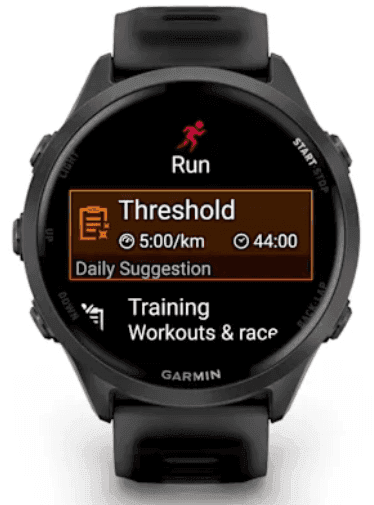
Garmin's VO2max estimate sits at the heart of nearly every training decision the watch makes for you. Get it wrong and your training load, recovery time, and race predictions all cascade into garbage. The number on your Garmin Forerunner 965 or Fenix 8 is not a lab result, but it is precise enough to track fitness trends over weeks and months if you feed the algorithm clean data.
How Garmin Calculates VO2max
Garmin derives VO2max from a combination of GPS pace, optical PPG heart rate from the wrist sensor, and running dynamics if you have a chest strap or pod paired. The wrist sensor reads blood volume changes via light reflection, not electrical impulses, so chest strap data like the HRM-Pro Plus gives the algorithm cleaner beats to work with. Garmin's model was built on Firstbeat Analytics research, comparing your heart rate response to your speed across multiple runs. The estimate updates after runs above a minimum intensity, roughly 70 percent of your max heart rate, for at least 10 minutes.
Mistake one is running with your phone GPS instead of the watch GPS active. Pace accuracy drops, the algorithm sees inconsistent effort-to-speed ratios, and your VO2max estimate drifts low. Mistake two is never calibrating your max heart rate. Garmin defaults to the 220-minus-age formula, which can be off by 10 to 15 beats per minute for a trained athlete. A wrong max HR ceiling means every heart rate zone is shifted, and the VO2max model is working from a broken reference point. Fix it in the user profile settings with a real field-test number.
Common Data Quality Problems
Mistake three is doing all your runs in GPS-assisted or UltraTrac mode to save battery. Sampling GPS every few seconds instead of every second kills pace accuracy on anything other than straight roads. On a trail or track with bends, you can see 5 to 8 second per kilometer errors, which the algorithm interprets as fitness change rather than sensor noise. Use full GPS plus GLONASS or multi-band on the Forerunner 965 for any run that is meant to feed the model. Mistake four is training exclusively at low intensity. Garmin's algorithm needs data from varied intensities to triangulate your aerobic capacity. If every run is zone 2, the model has no steep part of the effort curve to work from and the estimate stagnates or drops slightly over time even as you get fitter.
Mistake five is ignoring the fitness age and performance condition metrics that sit alongside the VO2max number. Performance condition, shown as a real-time value during a run, tells you whether today's heart rate response is better or worse than your baseline. A consistent minus 3 or minus 4 reading on easy runs often means accumulated fatigue or illness before your HRV data or recovery advisor flags it. Whoop's recovery score does something similar with HRV and resting heart rate, but Garmin surfaces it mid-run in real time, which is more immediately actionable for pacing decisions.
Comparing Garmin to Polar and Coros
Polar's VO2max estimate, called Running Index, uses a similar pace-versus-heart-rate model and is reasonably accurate on the Polar Vantage V3, but it does not integrate as deeply with training load history or race predictions. Coros watches on the Pace 3 and Vertix 2S produce a VO2max figure too, and independent testing puts it within 2 to 3 ml per kg per min of lab results on average, roughly the same margin as Garmin. Where Garmin pulls ahead is in the breadth of downstream metrics that the VO2max feeds: training status, load focus, heat and altitude acclimation adjustments, and the race time predictor. Coros still lacks the acclimation adjustments. Apple Watch still has no meaningful VO2max integration for structured training planning in 2026 beyond a basic cardio fitness level reading.
For cyclists, Garmin needs a power meter to produce a meaningful VO2max estimate via the cycling-specific FTP model. Heart rate alone on the bike is not enough because cardiac drift and pacing strategy create too much noise. Pair a Garmin with a Stages or Favero Assioma power meter and the cycling VO2max becomes a reliable second data point against your running estimate. A big gap between the two numbers, more than 5 ml per kg per min, often points to sport-specific muscular limiters rather than true aerobic ceiling differences.
What is missing from Garmin's implementation is transparency. The algorithm is a black box. You cannot see which individual runs contributed most to the last update or why the number dropped 2 points after a hard week that felt like real fitness progress. Polar's app is slightly better at surfacing the data behind the estimate. Garmin's Connect app gives you a trend graph but no granular breakdown. For athletes who want to understand the model rather than just read the output, that opacity is frustrating.
Bottom line: if you are a runner or triathlete using a Garmin Forerunner 265, 965, or Fenix 8 and your VO2max has been stuck or declining despite consistent training, work through these five fixes before blaming the hardware. Pair an HRM-Pro Plus chest strap for ECG-quality electrical heart rate data, set a real max HR, use full multi-band GPS, and include at least one session per week above zone 3. The estimate is not a lab test, but cleaned-up input data can shift it 3 to 5 points in four to six weeks. Coros Pace 3 is the closest budget alternative at around 230 dollars, but Garmin's ecosystem depth justifies the premium for anyone serious about long-term fitness tracking.
Mentioned watches
Head-to-head comparisons
Buying guides