Tag Heuer Connected Calibre E5: Everything We Know So Far
Tag Heuer is back in the performance wearable conversation with the Connected Calibre E5, and this time the Swiss luxury brand appears serious about closing the gap with dedicated sports watch makers. The Calibre E5 builds on the previous generation's Wear OS foundation but targets endurance athletes more directly, with upgraded sensors and a battery life story that Tag needs to get right if it wants shelf space next to a Garmin Fenix 8 or Coros Pace 3.
Sensors and Hardware
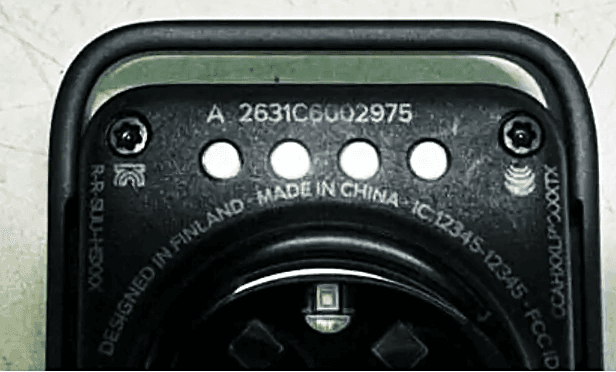
The Calibre E5 is expected to carry an upgraded optical PPG sensor array for wrist-based heart rate, using reflected light to measure blood volume changes under the skin. That is the same underlying physics as what you find on Polar's Precision Prime or Garmin's Elevate Gen 5 sensors, and the results will depend heavily on how Tag's algorithms process the raw signal. A chest strap like the Garmin HRM-Pro measures electrical impulses from the heart directly via ECG, which is categorically more accurate, especially at high intensities. Tag will also include a barometric altimeter reading air pressure to estimate elevation change, plus GPS for outdoor distance and pace tracking. SpO2, measured optically via a separate photodiode channel, is also confirmed.
Battery life is the number that matters most for this watch's credibility with triathletes and long-course runners. Wear OS devices have historically struggled here. The Apple Watch Ultra 2 pushes around 60 hours in low-power mode, the Coros Vertix 2S stretches past 140 hours in GPS mode, and Garmin's Fenix 8 Solar can theoretically run indefinitely in the right conditions. Tag has not published final figures for the Calibre E5, but sources suggest a target of around 100 hours in a reduced-GPS mode. If they hit that, it changes the conversation. If they fall short the way early Wear OS devices did, endurance athletes will ignore it entirely.
Training and Sports Modes
The Calibre E5 is expected to support triathlon multisport modes, which is a baseline requirement in 2026. Automatic sport detection, structured workout playback, and pool swimming lap counting are all reportedly included. Pool swimming accuracy depends on accelerometer-based stroke detection, not GPS, so the quality of wrist motion algorithms matters more than satellite lock in that context. Garmin's swim metrics, refined over years on the Forerunner and Fenix lines, set the benchmark here. Coros handles pool swimming competently. Tag will be starting with less athlete data than either of those companies, which is a real disadvantage when it comes to algorithm maturity.
Run metrics are where the gap between a Garmin Forerunner 965 and a luxury smartwatch has traditionally been widest. Real-time ground contact time, vertical oscillation, and stride length all require either a compatible chest accessory or a foot pod in most implementations. It is not yet confirmed whether Tag will support ANT+ accessories, which would open the door to third-party running dynamics tools. Bluetooth connectivity to chest HRM straps like the Polar H10 or Wahoo Tickr is expected. Without ANT+, the Calibre E5 is cut off from a significant part of the serious athlete's accessory ecosystem.
Recovery and Wellness Tracking
Recovery scoring is increasingly expected at this price point. Whoop 5.0 built its entire brand around HRV-based recovery, measuring heart rate variability during sleep to produce a daily readiness score. Garmin's Body Battery and Polar's Nightly Recharge do the same thing through nightly optical PPG readings. The Calibre E5 is expected to include HRV tracking and a recovery index, processed through the Wear OS health stack. Whether Tag builds proprietary recovery intelligence on top of that, or just surfaces Google's default metrics, will determine how useful this feature actually is for an athlete trying to decide whether to do threshold intervals or an easy spin.
What is missing or disappointing at this stage is the lack of confirmed training load and acute-to-chronic workload ratio features. Serious runners and triathletes using a Garmin Fenix 8 or Suunto Race S rely on those tools to manage injury risk across multi-week training blocks. There is also no confirmation of native Strava Live Segments or TrainingPeaks integration beyond basic workout sync. At a price point expected to land above 1,500 euros, those omissions are hard to overlook.
The Tag Heuer Connected Calibre E5 is aimed at athletes who want a watch that works in a boardroom and on a race course without carrying two devices. If battery life hits the rumored target and GPS accuracy holds up against the Garmin Forerunner 965, it becomes a genuine option for Olympic-distance triathletes and half-marathon runners who value design. If you are training for a full Ironman or running 100-mile weeks, the Coros Vertix 2S at half the price is a more honest tool.
Mentioned watches
Head-to-head comparisons
Buying guides