Amazfit Cheetah 2 Ultra HR Accuracy: Hyrox, Cycling, and SmO2 Tested
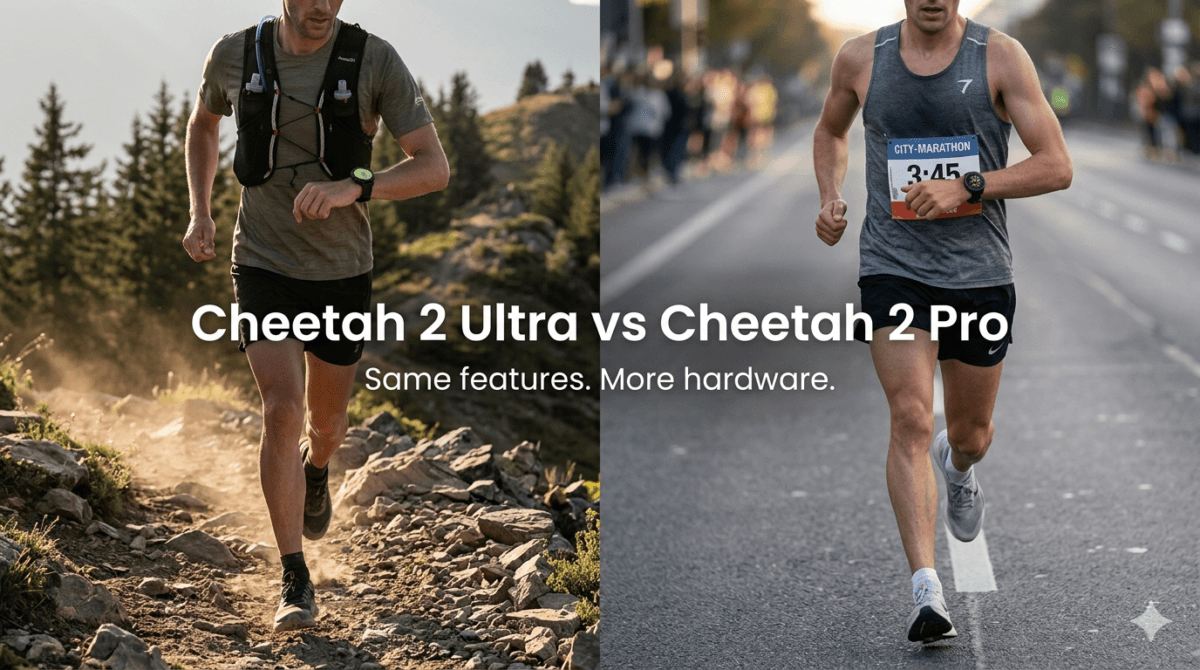
The Amazfit Cheetah 2 Ultra launched roughly four weeks after the Cheetah 2 Pro at £150 more, and on paper the spec sheets look almost identical. That price gap demands justification, and the place to start is the sensor suite, specifically how the optical PPG array performs under real athletic stress. Three separate tests now paint a consistent picture: this wrist-based sensor is punching well above its price class.
HR Accuracy Across Three Demanding Tests
The most controlled data comes from a Hyrox simulation run at 33°C in a gym environment, exactly the kind of hot, high-intensity, mixed-movement session that wrist optical sensors typically hate. The Cheetah 2 Ultra's PPG sensor tracked against a Whoop MG, a Garmin HRM-600 chest strap, and a Polar Verity Sense arm optical, returning near-zero mean bias across all three reference devices. To be clear on the physics: the Garmin HRM-600 reads electrical impulses via ECG-style electrodes on skin, while the Cheetah 2 Ultra and Polar Verity Sense both use light-based PPG to estimate blood volume changes at the wrist and arm respectively. Matching a chest strap to that degree of precision in a 33°C gym is not trivial.
The road cycling sprint test adds more weight to that result. Against the Whoop MG and Polar Verity Sense, the Cheetah 2 Ultra returned limits of agreement of plus or minus 3 bpm. The Fitbit Air, tested in the same session, came in at plus or minus 6 bpm. That is a meaningful difference when you are chasing threshold intervals and need zone accuracy to within a few beats. Three tests, three clean results: at this point the HR performance looks repeatable, not lucky.
SmO2, Sensors, and What the Ultra Adds Over the Pro
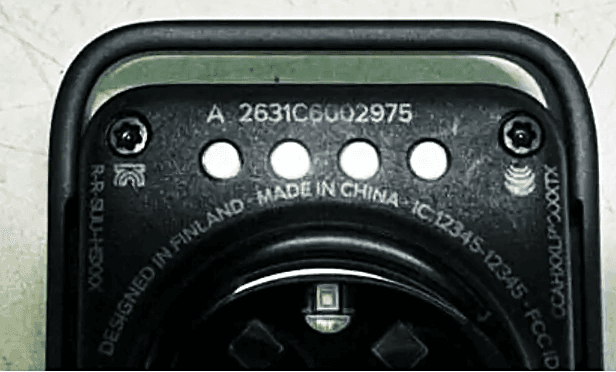
The headline differentiator between the Ultra and the Pro is an SmO2 sensor, which uses near-infrared optical light to estimate muscle oxygen saturation in the tissue beneath the sensor. This is separate from SpO2, which measures arterial blood oxygen via a different optical wavelength. SmO2 is more niche: it tells you how efficiently working muscles are consuming oxygen during effort, and it has been used in lab settings and by some elite endurance athletes to calibrate intensity. Practical use cases for a Hyrox athlete or cyclist include identifying when local muscle fatigue is outpacing cardiovascular delivery, though interpreting the numbers requires some background knowledge. The Pro lacks this sensor entirely.
Beyond SmO2, the spec gap between Ultra and Pro is narrow enough that it took a genuine side-by-side comparison to identify the differences. Both watches carry titanium cases and sapphire glass, both run the same GPS chipset, and both share the Amazfit Zepp OS platform with the same running metrics and training load tools. If you want the full breakdown of the Pro's performance across running, cycling, and swimming, our [Amazfit Cheetah 2 Pro review](/en/articles/amazfit-cheetah-2-pro-review-running-cycling-and-swimming-tested-2026-05-29) covers it in detail. GPS and battery performance specific to the Ultra are covered separately in our [GPS and battery test piece](/en/articles/amazfit-cheetah-2-ultra-gps-battery-and-trail-climb-feature-tested-2026-05-25), and the [55-hour battery endurance test](/en/articles/amazfit-cheetah-2-ultra-battery-test-55-hours-on-a-real-ride-2026-05-24) is worth reading before you dismiss Amazfit's battery claims.
Real-World Use Cases for Endurance Athletes
For a triathlete or Hyrox competitor, the HR accuracy story is the most immediately bankable result here. A plus or minus 3 bpm limit of agreement in a sprint cycling context means you can actually trust zone-based training from your wrist without reaching for a chest strap on every session. That is roughly on par with what you would expect from a Polar Grit X2 Pro or a Garmin Forerunner 965 in similar conditions, both of which cost more. Coros does not currently offer anything with SmO2 at this price point. Whoop does not have GPS at all, so it is a fundamentally different tool.
For swimmers, the optical sensor works in pool conditions and the watch is rated for open water, but SmO2 data is not available during swim sessions given the optical interference from water immersion. Running dynamics metrics are present and align with what the Pro offers, so if you are using Stryd or a footpod for power, the integration is there. Recovery tracking uses HRV from the optical PPG sensor overnight, not a dedicated ECG chip, which is worth knowing when comparing depth of recovery data against something like a Whoop MG or Polar Vantage V3.
What is missing or disappointing is harder to pin down from the available test data, but a few things stand out. The SmO2 sensor is unproven in field conditions beyond initial testing, and the data interpretation tools inside Zepp OS are not yet at the level of what Garmin offers through Firstbeat Analytics or what Polar provides with its training load features. The £150 premium over the Pro is a real ask when the functional difference for most athletes comes down to a single sensor that many will not know how to act on. Battery life and GPS accuracy seem strong based on the 55-hour ride test, but multi-sport durability across a full triathlon season is still an open question.
The Amazfit Cheetah 2 Ultra is built for the data-curious endurance athlete who wants SmO2 experimentation, clean HR tracking across Hyrox and cycling efforts, and a premium build without paying Garmin Fenix 8 money. At roughly £150 above the Pro, the value case depends entirely on whether SmO2 is on your must-have list. If it is not, save the money and buy the [Cheetah 2 Pro](/en/articles/amazfit-cheetah-2-pro-review-running-cycling-and-swimming-tested-2026-05-29). If you want to track muscle oxygenation alongside solid GPS and proven HR accuracy, the Ultra currently has no direct rival at this price point.
Mentioned watches
Head-to-head comparisons
Buying guides